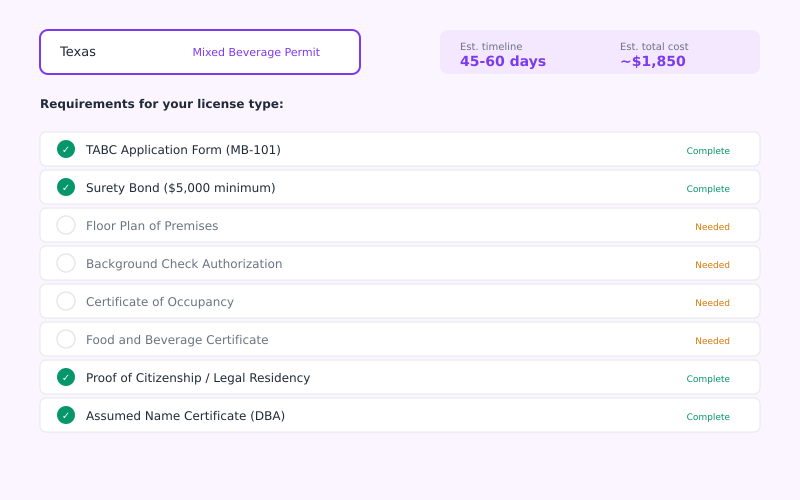
Know Exactly What You Need
Answer a few questions about your business. Get a complete checklist of documents, forms, and fees for your specific state and license type.
AI-powered application assistance for restaurant and bar owners. We handle the paperwork, you focus on your business.
Be first to know when we launch. No spam, ever.
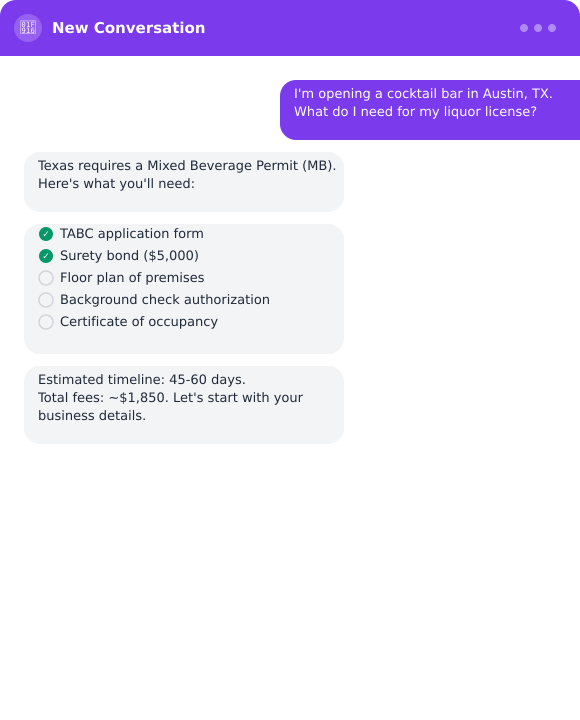
Applying for a liquor license is one of the most frustrating parts of opening a restaurant or bar. Every state has different requirements. Forms are confusing. One mistake can delay your opening by months — or get your application denied.
Most owners either:
Core Features
Every tool is designed to eliminate the friction between finishing work and getting paid.
Answer a few questions about your business. Get a complete checklist of documents, forms, and fees for your specific state and license type.
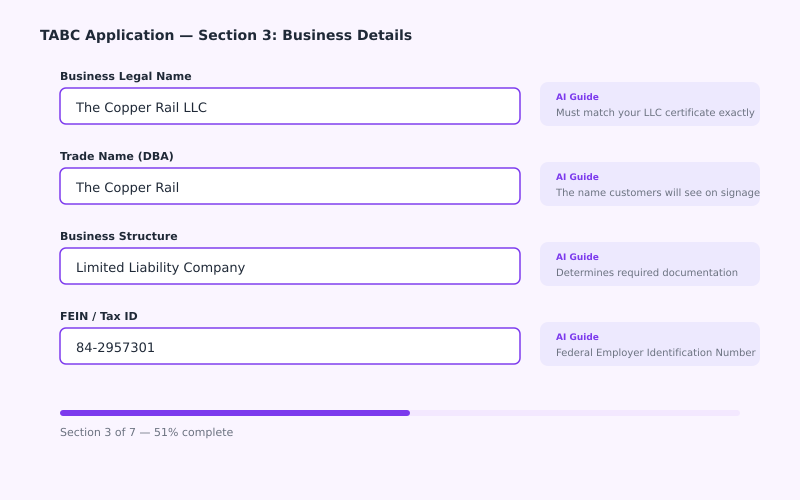
Our AI guides you through every field. No legal jargon. No guessing what "proof of moral character" means.
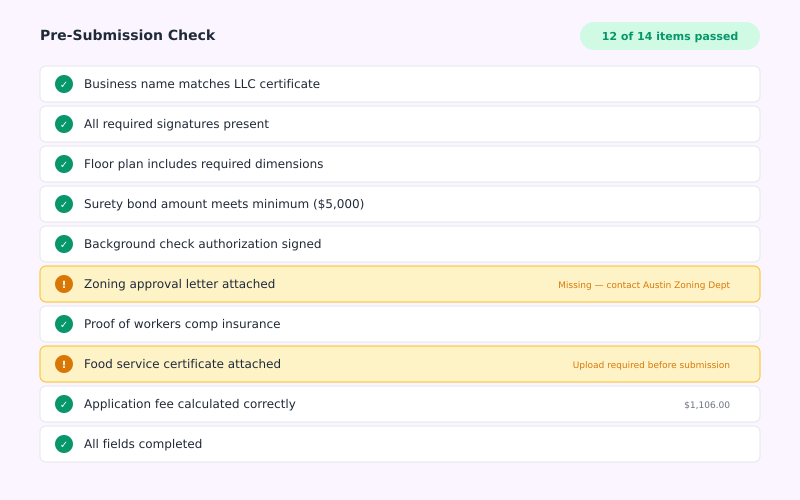
We check your application for common errors before you submit. Catch problems before the ABC does.
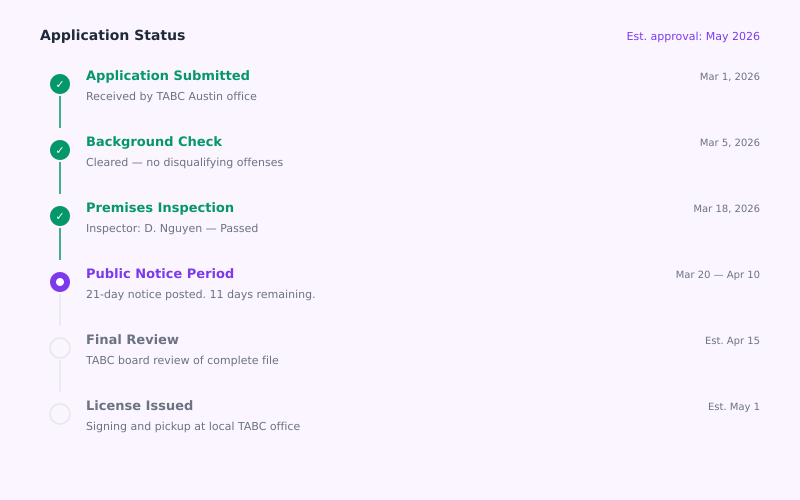
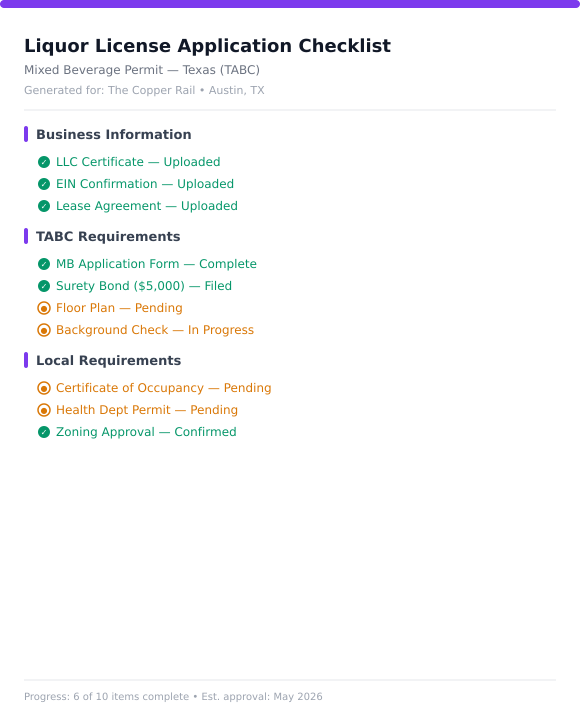
Know exactly where your application stands. Get reminders for deadlines and follow-ups.
A liquor license is a state-issued permit that allows a business to sell alcoholic beverages. Without one, selling alcohol is illegal — and penalties range from heavy fines to criminal charges.
The complexity comes from the patchwork of regulations across all 50 states. Each state has its own Alcoholic Beverage Control (ABC) board with unique rules:
Everything you need to know about the platform.
Processing times vary dramatically by state. Florida and Texas typically process applications in 30-60 days. California averages 60-90 days. New York and New Jersey can take 4-12 months. Your local ABC office can provide current estimates, but plan for delays — especially if your application requires corrections.
License fees range from $300 to $14,000+ depending on your state and license type. California charges $500-$12,000. New York ranges from $250-$4,500. Texas is $300-$4,500. Beyond the fee, budget for background checks ($50-$200), fingerprinting ($50-$100), surety bonds ($100-$500), and potentially attorney review ($500-$2,000).
Common requirements include: business formation documents (LLC/Corp papers), lease agreement or property deed, floor plan of the premises, personal financial statements, background check authorization, and proof of citizenship or legal residency. Many states also require a certificate of good standing, zoning approval, and health department permits.
It depends on the state and the offense. Most states conduct background checks and may deny licenses for felony convictions, alcohol-related offenses, or crimes involving moral turpitude. Some states have waiting periods (5-10 years) after which past offenses may not disqualify you. Consult your state's ABC board for specific policies.
A beer and wine license (often called a "Type 41" in California or similar designations elsewhere) permits sale of beer and wine only — no spirits. These licenses are typically cheaper, easier to obtain, and have shorter processing times. A full liquor license (often "Type 47" or "mixed beverage permit") allows sale of all alcoholic beverages including spirits, but is more expensive and competitive.
Not legally required, but many applicants hire attorneys or consultants to navigate the process. The decision depends on your state's complexity, your comfort with paperwork, and your budget. Simple applications in straightforward states (Florida, Texas) can often be done without legal help. Complex situations (New York City, California, or any situation involving prior denials) benefit from professional guidance. ---
Join thousands of restaurant and bar owners who are tired of liquor license confusion.